

precambrian
4.540 ma → 541 ma
the longest time
section titled “the longest time”the precambrian was the longest stretch of the entire history of the earth.
it began approximately 4.540 million years ago, with the formation of the planet, and ended 541 million years ago.
it occupies almost the 90% of geological time.
during this immense interval some of the most decisive processes of all occurred:
- the earth’s crust formed
- the first oceans appeared
- the first forms of life emerged
- the atmosphere changed deeply
- increasingly complex organisms began to exist
it was a very long time, silent and fundamental.
a very different world
section titled “a very different world”the earth of the precambrian did not resemble the current planet.
at first it was a much more hostile world.
the surface was still forming. the interior of the planet continued to release enormous amounts of heat. the atmosphere was very different. the continents, as we know them today, did not yet exist.
however, even in that remote scenario, processes began that would transform the planet forever.
the precambrian was not an empty stage.
it was the great beginning.
an invisible world
section titled “an invisible world”during most of the precambrian, life was microscopic.
there were no forests. there were no complex animals. there were no landscapes full of movement as we imagine them today.
life existed on another scale.
among the main organisms were:
- bacteria
- archaea
- cyanobacteria
they were tiny forms of life, but extraordinarily important.
although invisible to the naked eye, they carried out enormous changes over millions of years.
the architects of the planet
section titled “the architects of the planet”one of the most important processes of the precambrian was the transformation of the atmosphere.
cyanobacteria, through photosynthesis, began to release oxygen.
that change was not immediate or simple.
for a long time, the oxygen reacted with other elements of the planet before beginning to accumulate in the atmosphere.
but over time, its presence increased and deeply altered the conditions of the earth.
thanks to that:
- the atmospheric composition changed
- the oceans were modified
- the evolution of more complex forms of life became possible
without those microorganisms, the subsequent world simply would not have existed.
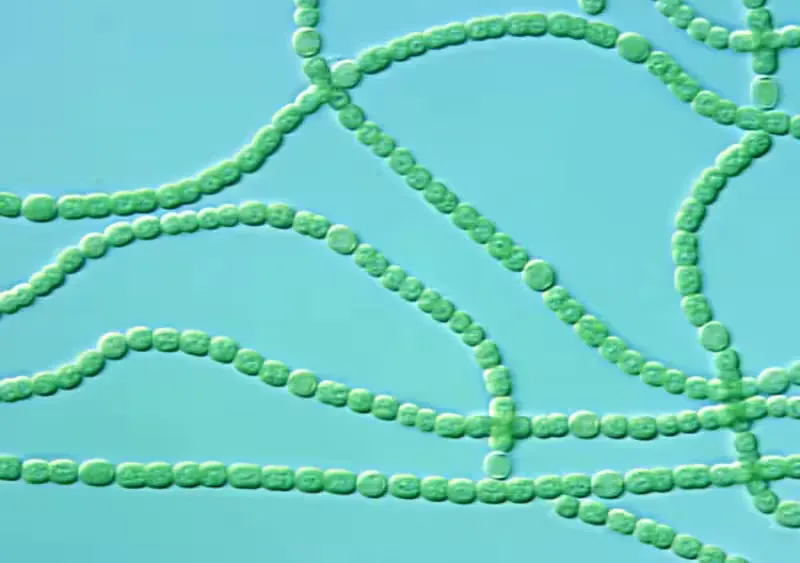
> cyanobacteria: microorganisms that began to release oxygen in the atmosphere
the first steps towards complexity
section titled “the first steps towards complexity”although for a long time life was simple, the precambrian did not remain motionless.
throughout this era, decisive biological innovations began to emerge.
some cells began to associate. organisms formed by several cells appeared. life began to explore new forms of organization.
this did not yet mean the appearance of modern ecosystems, but it did mark an enormous change.
for the first time, life was beginning to become more complex in its structure.
the first multicellular organisms
section titled “the first multicellular organisms”in the final part of the precambrian, larger and stranger multicellular organisms appeared.
many of them belong to the so-called ediacaran period.
their forms do not always resemble those of current animals, and for a long time they have been difficult to interpret.
nevertheless, they represent a key moment:
- life was no longer only microscopic
- visible organisms began to exist
- ecosystems became more complex
- the planet was approaching a new biological stage
they were still worlds very different from the later ones, but the change was already underway.
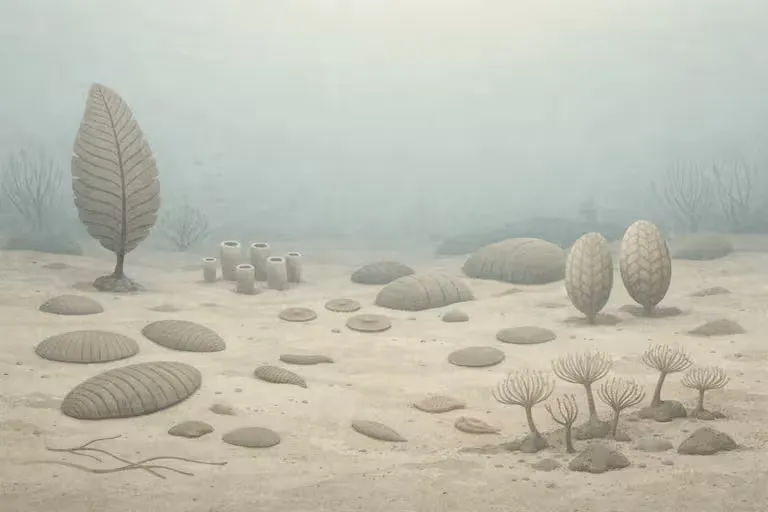
> forms of life from the ediacaran period, before modern animals
a long preparation
section titled “a long preparation”the precambrian may seem like a silent stage compared to later eras full of spectacular animals.
but its importance is immense.
during this period, almost all the basic conditions that would make the subsequent history of life possible were prepared:
- a more stable planet
- consolidated oceans
- persistent life
- oxygen production
- appearance of early complex organisms
everything that would come after depended on this very long preparation.
during the precambrian, the earth was not still: it was building the bases of everything else
the end of an immense era
section titled “the end of an immense era”at the end of the precambrian, the planet had already changed deeply compared to its beginnings.
oxygen was present in the atmosphere. the oceans housed a great diversity of microscopic life and early multicellular forms. ecosystems were beginning to acquire a new complexity.
the world was not yet that of the great animals that would come later.
but it was already prepared for one of the most important changes in all natural history.
why the precambrian was so important
section titled “why the precambrian was so important”the precambrian was decisive because in it occurred the most basic and fundamental processes of terrestrial history.
during this time:
- the planet formed
- the oceans appeared
- life emerged
- the atmosphere began to transform
- oxygen accumulated
- early multicellular organisms emerged
if the later eras show the expansion of life, the precambrian shows its origin and its slow preparation.
what comes after
section titled “what comes after”after the very long world of the precambrian, a completely new stage began.