

the first oceans
a planet that begins to cool
section titled “a planet that begins to cool”after millions of years of intense activity, the earth’s surface began to cool.
the crust became more stable, and the temperature began to drop slowly.
although it was still a hostile environment, something fundamental was about to happen.
the origin of water
section titled “the origin of water”water did not appear suddenly.
it came from two main sources:
- water vapor released by volcanoes
- impacts of comets and meteorites rich in ice
over time, the amount of vapor in the atmosphere increased enormously.
rains for millions of years
section titled “rains for millions of years”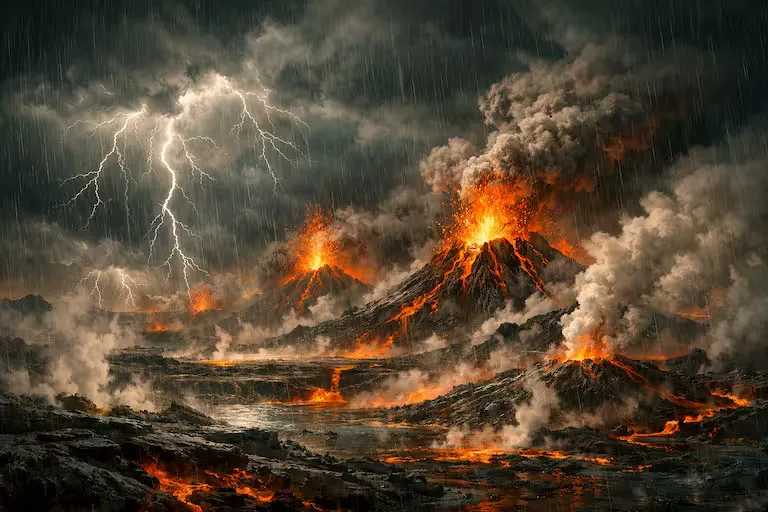
> constant rains over primitive earth
when the temperature dropped enough, the vapor began to condense.
it rained for millions of years.
they were not rains like the current ones.
they were constant storms, violent, almost endless.
the formation of the oceans
section titled “the formation of the oceans”little by little, the water began to accumulate in the lowest areas of the planet.
thus the first oceans were born.
they were very different from the current ones:
- hotter
- more acidic
- rich in dissolved minerals
but they were already liquid water.
a fundamental change
section titled “a fundamental change”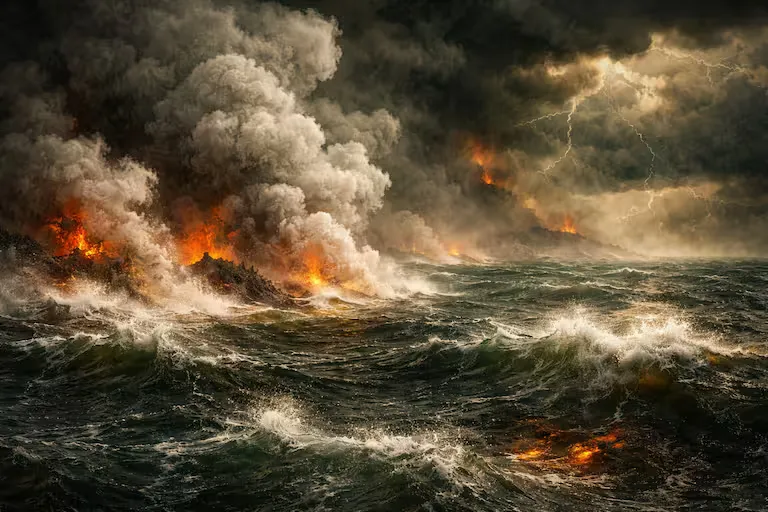
> representation of the earth's first oceans
the appearance of the oceans marked a before and after.
for the first time, the earth had an environment where complex chemical reactions could occur.
and with that, the door opened to something completely new.
the next step
section titled “the next step”in these primitive oceans, under extreme conditions, the first organic molecules would begin to form.
the path to life had just begun.