

the first forms of life
the birth of life
section titled “the birth of life”at some point, in the primitive oceans, something extraordinary happened.
the molecules began to organize in a new way.
they not only reacted with each other.
they began to form structures capable of maintaining and replicating themselves.
extremely simple organisms
section titled “extremely simple organisms”the first forms of life were incredibly simple.
they had no organs
they had no complex structures
they were not visible to the naked eye
they were unicellular organisms.
small cells capable of:
- maintaining their structure
- exchanging matter with the environment
- reproducing
an invisible world
section titled “an invisible world”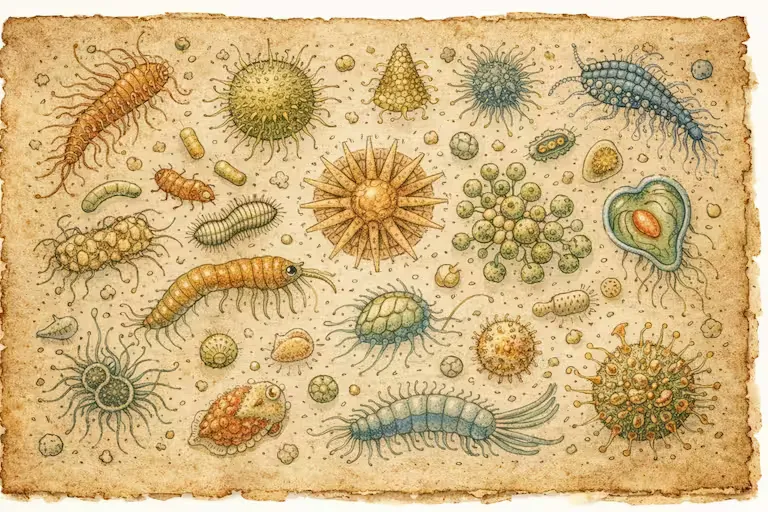
> representation of primitive microorganisms in the oceans
these first living beings lived in the oceans.
they were invisible, but they were everywhere.
for millions of years, life on earth was exclusively microscopic.
extreme conditions
section titled “extreme conditions”life arose in an environment very different from the current one.
there was no free oxygen
the temperature was high
volcanic activity was still intense
nevertheless, these organisms managed to adapt.
a slow transformation
section titled “a slow transformation”over time, these forms of life began to change the planet.
some developed processes like photosynthesis.
little by little, they began to release oxygen into the atmosphere.
the beginning of everything
section titled “the beginning of everything”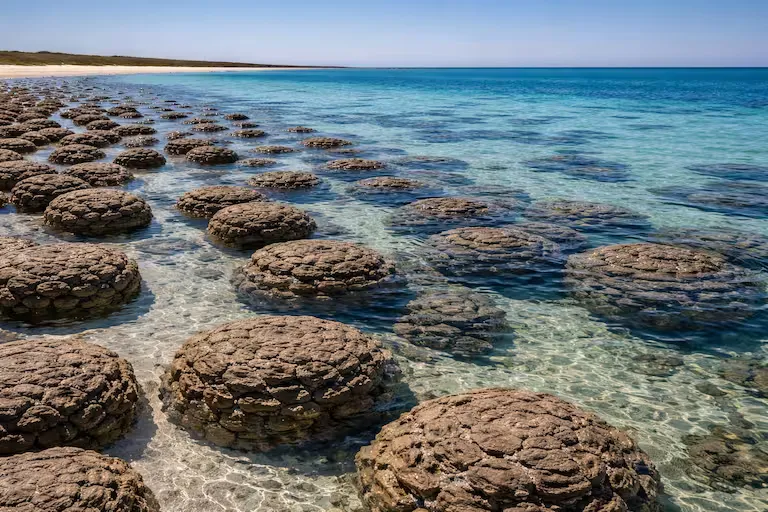
> stromatolites, one of the oldest evidences of life on earth
these first forms of life marked the beginning of a completely new story.
everything that would come after, including the dinosaurs, would depend on this moment.
life had begun.